
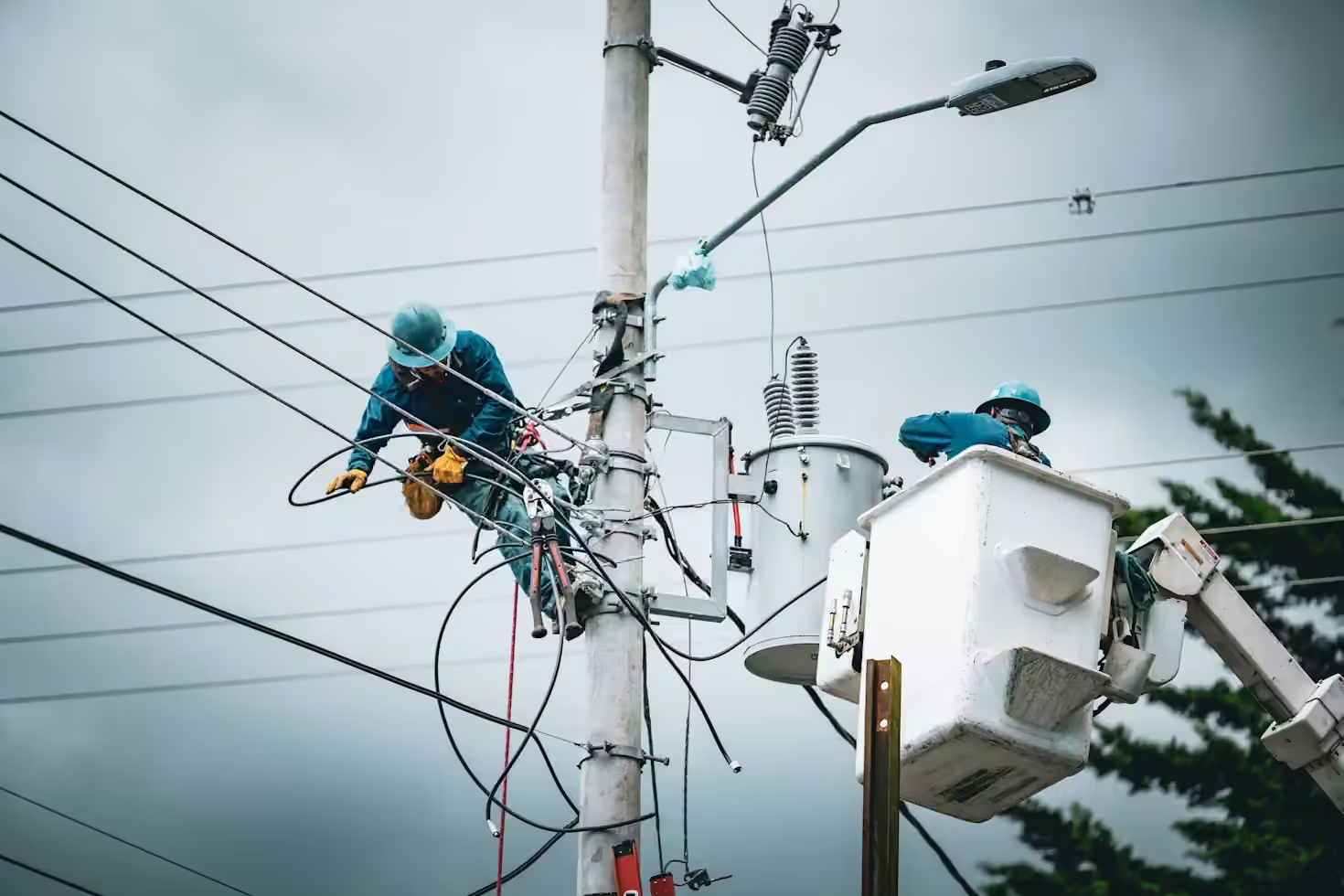
It is a process to measure the total value of electrical work for a project. It involves extracting the information from project drawings, such as material quantities and installation requirements. The extracted quantities help with an accurate estimate. These services’ difficulty varies from project to project; compared to a residential project, a commercial project includes multiple systems such as power distribution, lighting, fire alarms, communication, and emergency power, making a systematic approach essential.
In this blog, we will discuss step by step how electrical takeoff for a commercial project is done. The important factors on which these services rely the most. Our firm provides Electrical Takeoff Services with professionalism and accuracy that will help you a great deal with your project.
Commercial Electrical Takeoff Checklist
There are some necessary factors which are to be considered while doing commercial electrical takeoff.
Initial Component to Pull from the Drawings
The first and important step before calculating or assuming the quantity is checking the electrical drawings to collect the latest information. The drawings must be up to date so that errors in the takeoff don’t occur. Once you fully understand the drawings, follow these steps.
- Do the count, lengths, and schedule separately by system, so power, lighting, emergency and other specialist services are not mixed.
- Use calibrated drawings to measure cable routes, then make reasonable allowances for termination, testing, drops, and bends.
- Before final pricing, convert quantities into labour outputs, procurement packages, and handover documents.
Understand the Scope of a Project
Determining the electrical contractor’s responsibilities and understanding the boundaries of the work are two aspects of examining the project scope. It is necessary to confirm whether switchgear, controls integration, testing, temporary power, and builders’ work are included or excluded. Before deciding on labour, confirm cable containment, support system access, equipment and out-of-hours working assumptions.
Specification of a Project
Project specifications are used with construction drawings and are written instructions that cannot be fully illustrated on plans. They set forth material quality, installation methods, testing procedures, performance requirements and applicable codes. Commercial projects often have requirements that are unique and can affect both material quantities and labour costs.
Perform Takeoff
After understanding the scope and specification of the project, the estimator performs the takeoff. Quantifying every material and component makes it easy to make an accurate estimate and bid documentation. In this process, the estimator calculates quantities such as the count of electrical devices, lighting fixtures, conduit, conductors and cables, and the count of distribution equipment. For a commercial electrical project, all fire protection components are necessary, such as smoke detectors, heat detectors, and others.
Performing an accurate takeoff ensures that the project will not face any material shortage. It also ensures low wastage of material.
Labour Estimation
The estimator determines the amount of labour needed for installation, testing, and supervision in this step. The biggest project expense is frequently labour. A precise labour estimate guarantees that your bid will be profitable and competitive. Due to the complexity of commercial electrical work, labour estimates must be adjusted for factors such as crowded work areas, phased construction, overtime and accelerated schedules, limited working hours, and other significant considerations.
Once the total labour hours are determined, multiply them by the fully burdened hourly labour rate.
Material Pricing and Equipment Cost
The estimator sources pricing for all materials based on the determined quantities of each material. To ensure accurate cost estimates, this entails getting quotes from suppliers and taking market conditions into account. Since material pricing affects the project’s profitability, it is crucial for bid preparation. This also applies to equipment cost estimation. It includes tools like cable pullers, scissor lifts, boom lifts, temporary generators, core drills, and others that are used to install electrical materials.
Insulation resistance testing, ground testing, circuit verification, functional testing, and system commissioning are frequently needed for commercial projects. The estimated cost will include the specialised labour and equipment needed for these tasks.
Adding Overhead and Profit
Overhead includes indirect costs like insurance, permits, and administrative expenditures. After that, the profit margin is added to cover risk and give the contractor a return. Many estimators have been known to overlook overhead when estimating costs. Profit and the budget are impacted by this. This error could cause work to be delayed and the project budget to be exceeded.
Bid Submission
Incorporate all additional estimates, such as overhead and profit, after analysing the material quantity takeoff and cost estimation. All of these elements come together to form a complete bid package. It contains all the thorough documentation needed to satisfy the needs of the client. Submitting the entire bid to the general contractor or the client is the last stage. For the project to be considered and possibly awarded, the bid must be submitted on time and with organisation.
Conclusion
A detailed commercial electrical takeoff checklist will help to prevent costly omissions and allow contractors to prepare accurate, competitive bids. Estimators provide accurate estimates, and thus successful execution of projects and increased profitability. A standardised checklist not only improves teamwork but also speeds up the estimating process and gives more confidence when bidding on commercial electrical projects.
Need professional commercial electrical takeoff services? Apex Electric Estimating Inc delivers accurate, timely takeoffs and estimates to help you win more bids. Email your plans to [email protected] or call +1 (862) 366-7732 for a free quote.